Showing posts with label poetry. Show all posts

Friday, February 15, 2008

Come On, Rain!


Created with beautiful, poetic language, Come On, Rain! Really lets you experience the anticipation of waiting for the rain on a smoldering summer day. Tessie and her mama have been without rain in the heat for three weeks. Tessie wants to put her suit on, but her mom won't let her. Tessie smells rain and she runs to her friends house and tells her to put her suit on. They get their suits and run out waiting for the rain. It comes. The grown-ups come out to tell them to get quiet and the rain soothes them, so they play in the street as well. Everything becomes new. The combination of illustrations and poetic language make this an unforgettable story.

Hesse, K. and Muth, J. (2000) Come on, Rain! Scholastic: New York.

Saturday, February 2, 2008

Honey, I love and other love poems


This is the most beautiful, down-to-earth book of poems for children. Greenfield invites us into the life of a child with a rope rhyme. We experience riding on a train and keeping mom company all through the eyes of a child. There are sixteen poems that will become memorized out of love for them in your classroom. Even the illustrations are well done and provided by well known illustrators Dillon and Dillon. The children in my class love "Things." They repeat it even when we are standing in line. I used it to teach them about the rhythm in poetry.
Greenfield,E. and Dillon, L. (1978) Honey, I love and other love poems. Trophy: New York.

Monday, April 30, 2007

The Frogs Wore Red Suspenders


This is a beautifully illustrated book of poems. The illustrations are on both sides of the page, with the poem sitting on one of those sides. The poems are funny and rhyme. Some of the poems are at a high reading level, but they are also high interest poems. The title poem is about the frogs and pigs singing to the chickens and ducks. This is a shorter, beautifully illustrated book of poetry like The New Kid on the Block.
Prelutsky, J. and Mathers, P. (2002) The Frogs Wore Red Suspenders. Greenwillow Books: New York

Sunday, April 29, 2007

The New Kid on the Block


A large collection of Prelutsky's poems exist in this book. The poem the book is named for is about a bully that picks on all the kids and is twice the size of everyone. It turns out she is a girl. This is a funny book of poems that I would compare to Silverstein. It is best used to pick poems out of because of the large size. The pages are not in color, so in my first grade class, the interest isn't held as long as it would be with colorful illustrations. However, the poems are really funny and even make me laugh. You'll learn why you shouldn't argue with a shark, eat a dinosaur, or have an alligator for a pet.
Prelutsky, J. (1984) The New Kid on the Block. Greenwillow Books: New York

Monday, March 19, 2007

Quick as a Cricket


This book of similes shows animals that represent feelings like “nice as a bunny” and “shy as a shrimp.” Some of the similes used are old sayings like ‘strong as an ox”. The illustrations work with your imagination to show what the simile might look like. The cover shows a little boy riding a cricket because the simile is “quick as a cricket.” A website with curriculum connections: http://library.uncc.edu/files/5/cimc/pdfs/units/quickcricket.pdf

Wood, A. and Wood, D. (1982) Quick as a Cricket. Child’s Play: London

In the Tall, Tall Grass


A little boy is watching nature from behind the grass. The rhythm of the insects makes a great read-aloud. This book provides a great way to get younger children excited (not that they aren’t already) about insects. The rhyming in the book captures your attention as it progresses from day to night with the different kinds of insects that follow their normal pattern.

Fleming, D. (2001) In the Tall, Tall Grass. Holt: New York

Sunday, March 18, 2007

A Plump and Perky Turkey


In this story, all the turkeys have left the town before Thanksgiving and the people don't know what to do. They need a turkey or they will end up eating shredded wheat for Thanksgiving. Ebenezer Beezer, one of two characters dressed in a suit, has an idea. The town has an arts and crafts fair with turkey art and asks turkeys to be models for the art. The turkey realizes that they want to eat him so he escapes before they finish judging the contest. I enjoy the caricatures of townspeople that are on each page of this book; however, it is interesting to point out that the main character with all the ideas is one of the richest townspeople. This is a fun story to read with children who enjoy the trickery of the turkey. Teachers could use it to think about art and what different pieces of art are made from. Bateman, T. and Shelly, J. (2001.) A Plump and Perky Turkey. Scholastic: New York.

Sunday, March 4, 2007

Pocket Poems

This poetry anthology is great for children. The poems are all relatively short and readable. A variety of topics are available throughout the book. Some of the poems rhyme while others don't. It is great to share with a class at any time during the day or the school year. It has many poems children could perform with instruments or act out. It also has the Keep a Poem in your Pocket poem!


Katz, B. and Hafner, M. (2004) Pocket Poems. New York: Dutton's Children's Group

Saturday, February 24, 2007

Math Fables

In each short fable, children are shown different ways to group numbers. Tang uses rhymes in each of his fables to keep the reader interested. The fables get increasingly difficult as the reader gets accustomed to the work. This is a great way to combine math and literature.
Tang, G. and Cahoon, H. (2004) Math Fables. Scholastic: New York.

Saturday, February 3, 2007

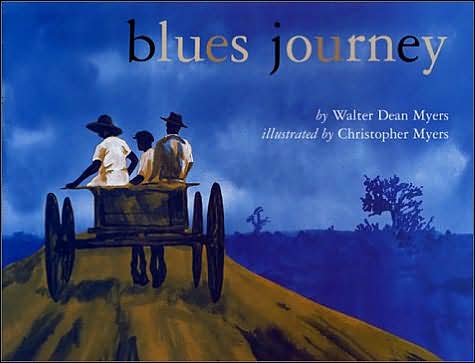
blues journey

This soulful lyrical poem tells a tale of the African experience. A tale of hope, despair, poverty, and love that children will appreciate through reading or listening. Students will enjoy reading the comeback lines aloud as they should be heard not just read. Christopher Myers used white and brown paper bags along with paint to illustrate this book with collages along with many images of African American children and adults. One striking illustration shows a young man looking through the hole of the sole of his shoe.

Myers, W. (2003). Blues Journey. New York City: Holiday House

Langston's Train Ride


Langston's Train Ride is foremost an illustrated version of "The Negro Speaks of Rivers," which was published by Hughes in 1921. The illustrator, Leonard Jenkins, uses collages of paintings to awe the reader's visual senses as the reader gets involved with the powerful text. The backstory of the train ride relates to children's lives as many have to travel to visit moms or dads that don't live in the same house.
Burleigh, R. (2004). Langston's Train Ride. New York: Orchard Books

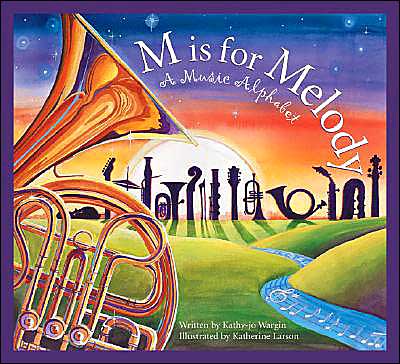
M is for Melody: A Music Alphabet


M is for Melody is a alphabet book that could work in multiple settings. Young readers will enjoy the rhyming lines of this musical alphabet book, while older readers will comprehend more of the terminology. There are helpful side notes on each page that explain more than the lines of poetry. This book can be used in a music class as well as the regular classroom.
Wargin, K. (2004). M is for Melody. Chelsea: Sleeping Bear Press

ellington was not a street


This book is actually a poem created from Shange's poem "Mood Indigo" created in 1983. The poem is about Shange's childhood, which was filled with African American leaders. It showcases innovators such as Dizzy Gillespie, Duke Ellington, W.E.B DuBois, and many more. One aspect I find helpful is the section of biographical information at the end of the book that gives the reader more information about each man featured. This book would be better if it had a companion displaying female African-Americans of influence.
Classroom activities are available through scholastic, the publisher, at this website.

Shange, N. (1983). Ellington was not a Street. New York City: Simon & Schuster Books for Young Readers

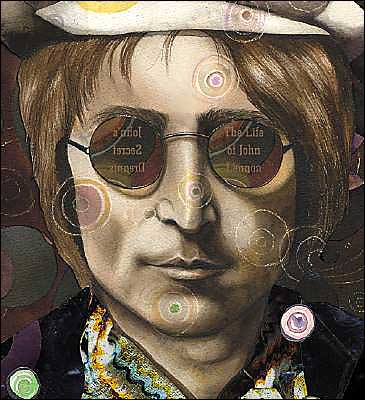
John's Secret Dreams: The Life of John Lennon


Illustrations created using collage and water colors are visually appealing. Music lyrics and quotes are interspersed with free-verse poetry to tell the story of John Lennon's life. The book ends with a timeline of important dates in this musician's life. An interesting way to include 20th century history into a music class or social studies lesson. Teachers could bring music to entice students' interests of a controversial time in the world's history.

Rappaport, D. (2004). John's Secret Dreams. New York City, Hyperion Books for Children